We've all heard the claim that dairy products can exacerbate acne, but is there really any truth to it? As we explore the connection between dairy and acne, it becomes clear that the hormones present in milk, cheese, and yogurt – such as testosterone and insulin-like growth factor 1 (IGF-1) – play a significant role in disrupting our natural hormone balance. But what exactly is the mechanism behind this phenomenon, and how can our diet choices impact our skin health?
Some of the links in this content may be affiliate links. If you make a purchase through these links, we may earn a small commission at no extra cost to you. Thank you.
Dairy and Acne Connection
Examining the dairy and acne connection, we're led to ponder the mounting evidence indicating a correlation between dairy consumption and acne development in teenagers. The evidence suggests that dairy, especially milk, plays a significant role in acne breakouts. Skim milk, in particular, is associated with acne due to the presence of hormones like testosterone and IGF-1 growth factor. These hormones can trigger inflammation, which worsens the severity of acne.
Western diets, which are high in dairy, are under scrutiny for their potential impact on acne rates. The high dairy intake in these diets can lead to increased IGF-1 levels, exacerbating acne symptoms. Adjusting our diet to reduce dairy intake, especially opting for low-glycemic-index options, may help lower IGF-1 levels and improve acne symptoms.
The Role of Hormones
As we delve further into the connection between dairy and acne, it's essential that we grasp the significant role hormones play in this equation. Hormones like testosterone and IGF-1 growth factor, found in milk, may contribute to acne development.
Here's how hormones in milk can affect our skin:
- Upset natural hormone balance: Hormones in cows' milk can disrupt our natural hormone balance, potentially triggering acne.
- Inflammation and worse acne: Inflammation caused by hormones in milk can worsen acne severity.
- Skim milk's negative effects: Skim milk, with its higher glycemic index and lower skin-friendly fatty acids, may exacerbate acne more than whole milk.
- Hormonal imbalance and acne stimulation: Hormones like IGF-1 and androgens found in milk can disrupt natural hormone balance and stimulate acne.
Understanding the hormonal impact of dairy on our skin is vital in deciphering the link between dairy and acne. By recognizing these hormonal effects, we can better navigate the complexities of dairy consumption and its influence on our skin health.
Inflammation and Skin Health
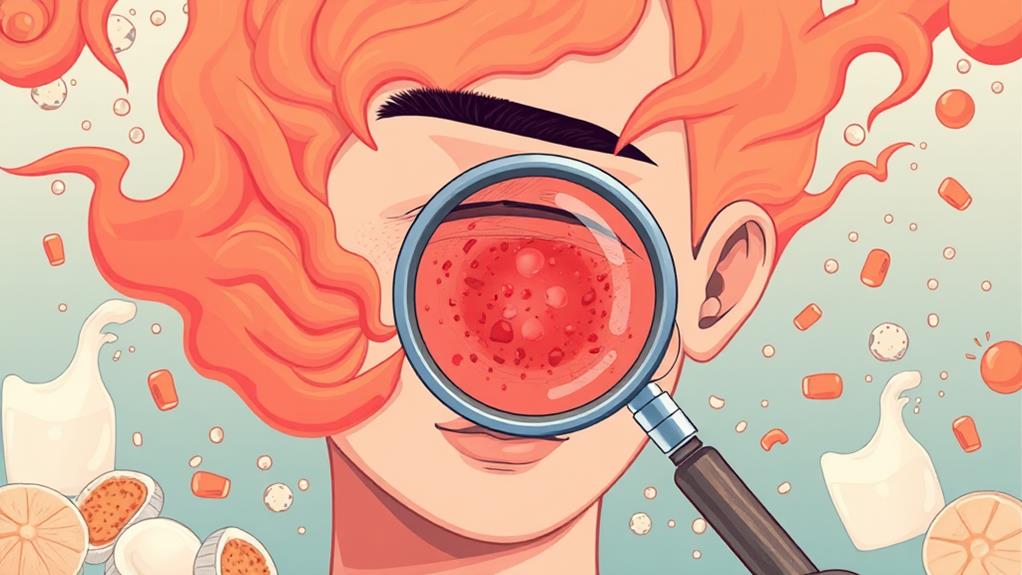
We've established that hormones in dairy products can disrupt our natural balance and lead to acne. Now, let's explore the role of inflammation in skin health. Inflammation plays a significant part in acne development and severity, and dairy products can be a culprit. Hormones in these products can induce inflammation, worsening acne symptoms.
Additionally, consuming high-glycemic index foods can trigger inflammation, exacerbating acne.
On the other hand, antioxidants found in fruits and vegetables can help decrease inflammation, supporting skin health. By managing inflammation through our diet, we can enhance overall skin health and reduce acne breakouts. It's crucial to be mindful of the foods we eat, choosing those that combat inflammation rather than fueling it.
Nutrition and Acne Management
Nutrition plays a pivotal role in acne management, and understanding the connection between food choices and skin health is necessary. As we explore the world of acne management, it's evident that our diet has a significant impact on our skin. Studies have shown that high glycemic index foods can worsen acne, while antioxidants in fruits and vegetables help decrease breakouts.
Here are key takeaways to keep in mind:
- Dairy intake can contribute to acne development due to high sugar intake and omega-6 fatty acids, which can lead to increased insulin levels and sebum production, resulting in inflammatory skin.
- Low-glycemic-index diet helps lower IGF-1 levels, reducing acne severity.
- Balanced nutrition rich in vitamins, minerals, and omega-3 fatty acids is essential for healthy skin and acne management.
- Adequate nourishment like zinc and vitamins A are necessary to prevent worsening acne symptoms.
The Impact of Diet Choices
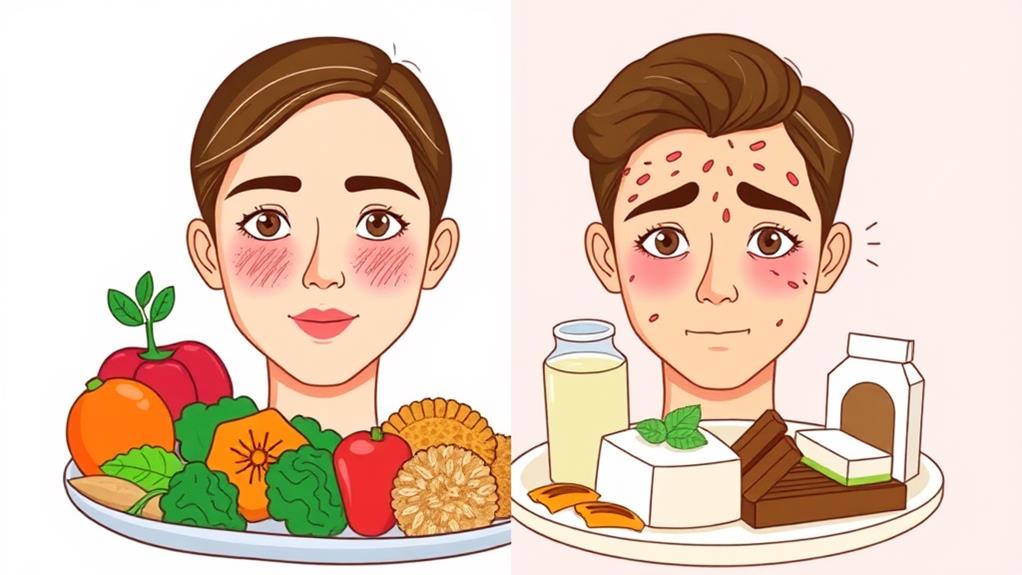
One important aspect of acne management is understanding the influence of our diet choices. We've found that certain dietary factors can either exacerbate or alleviate acne symptoms. On one hand, high glycemic index foods and omega-6 fatty acids can contribute to acne development. On the other hand, antioxidants in fruits and vegetables may help reduce breakouts.
| Acne-Aggravating Foods | Acne-Fighting Foods |
|---|---|
| High glycemic index foods | Antioxidant-rich fruits and vegetables |
| Omega-6 fatty acids | Omega-3 fatty acids |
| High sugar intake from dairy | Low-glycemic-index diet |
To manage acne, it's important to make informed dietary adjustments. Following a low-glycemic-index diet, for instance, can help lower IGF-1 levels and reduce acne severity. Additionally, a balanced diet rich in essential vitamins, minerals, and omega-3 fatty acids is crucial for maintaining healthy skin. We must also be mindful of potential Zinc deficiency and inadequate intake of essential vitamins like A, which can worsen acne symptoms. By making conscious dietary choices, we can take a significant step towards reducing acne breakouts and achieving healthier skin.
Frequently Asked Questions
How Do I Know if Dairy Is Causing My Acne?
We suspect dairy is causing our acne when we notice a skin analysis connection, try an elimination diet, and identify hormonal imbalance or dairy sensitivity as acne triggers, leading to inflammation response and impacting gut health.
Does Cutting Out Dairy Help Acne?
We've heard it a million times: cutting out dairy is a game-changer for acne. And honestly, it's true! Swapping dairy for alternatives, tweaking our skincare routine, and addressing hormonal changes can lead to remarkable improvements; just ask our dermatologist-approved, gut-friendly, acne-free selves!
What Does a Dairy Face Look Like?
We've noticed that a dairy face typically exhibits skin inflammation, facial redness, and frequent acne breakouts due to dairy sensitivity, hormonal imbalance, and acne triggers; recognizing these signs helps us make informed choices about dairy consumption and opt for dairy alternatives to promote better skin health.
Which Milk Does Not Cause Acne?
As we navigate the murky waters of dairy and acne, we're left wondering, which milk doesn't cause acne? We've found that whole milk, with its lower glycemic index and skin-friendly fatty acids, is a better choice, while plant-based alternatives can be a safe haven for those with lactose intolerance.
Conclusion
As we've explored the dairy and acne connection, it's clear that the hormones and glycemic index of dairy products can cause chaos on our skin. The outdated idea that acne is only a teenage issue is debunked – our dietary choices play a significant role. By reducing dairy consumption and choosing low-glycemic alternatives, we can take charge of our skin health. The verdict is in: a well-informed diet is the key to revealing a glowing, acne-free complexion.